Supporting hormones naturally can feel overwhelming, but seed cycling is a simple, food-based approach that many women swear by. This practice involves eating specific seeds during different phases of the menstrual cycle to support hormone balance, improve symptoms like PMS and irregular periods.
What is Seed Cycling?
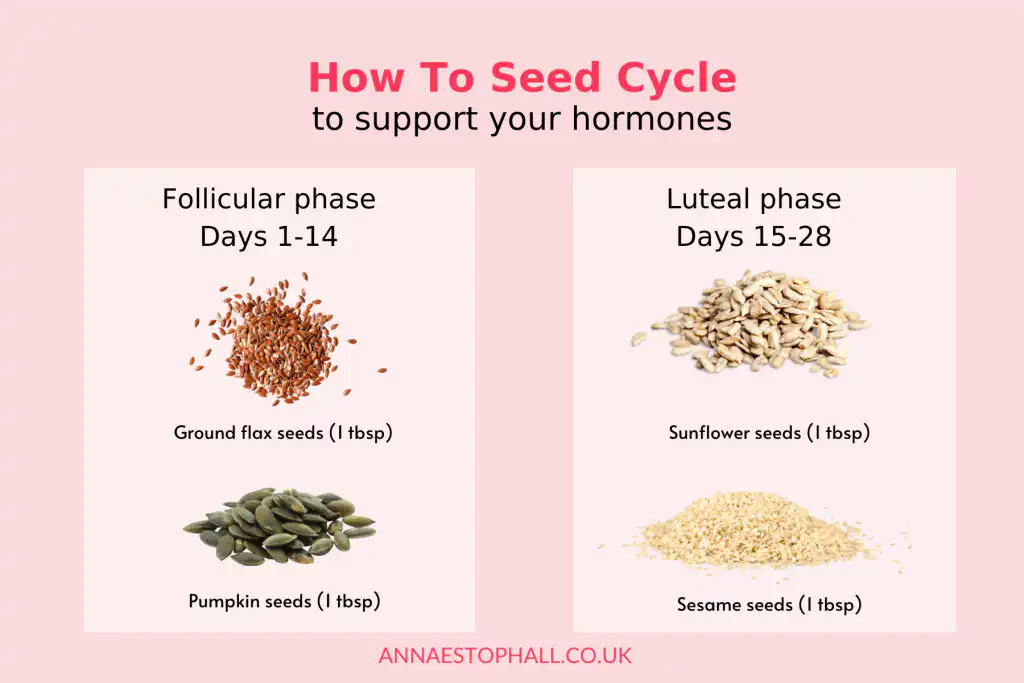
Seed cycling is the practice of rotating different types of seeds throughout the menstrual cycle to naturally support hormone production and metabolism. The method involves consuming flaxseeds and pumpkin seeds during the first half of the cycle (follicular phase) and sunflower and sesame seeds in the second half (luteal phase). Each type of seed provides specific nutrients that may help regulate oestrogen and progesterone levels.
How Does Seed Cycling Work?
The menstrual cycle is divided into two main phases:
Follicular Phase (Days 1-14)
This begins on the first day of menstruation and lasts until ovulation. Oestrogen is the dominant hormone, helping the uterine lining build up and supporting egg maturation.
- Eat: 1 tablespoon each of flaxseeds and pumpkin seeds
- Why? Flaxseeds contain lignans, which help modulate oestrogen levels, while pumpkin seeds are rich in zinc, which supports progesterone production in the second half of the cycle.
Luteal Phase (Days 15-28)
This phase starts after ovulation and lasts until the next period begins. Progesterone levels rise to support potential pregnancy, while oestrogen decreases.
- Eat: 1 tablespoon each of sesame seeds and sunflower seeds
- Why? Sesame seeds provide lignans that may help balance excess oestrogen, while sunflower seeds are rich in vitamin E, supporting progesterone production.
What If You Have No Periods or an Irregular Cycle?
If you don’t have a regular cycle due to conditions like PCOS, menopause, or post-birth control adjustments, you can still benefit from seed cycling by following the lunar cycle as a guide:
- New Moon to Full Moon (Follicular Phase) – Consume flaxseeds and pumpkin seeds.
- Full Moon to New Moon (Luteal Phase) – Consume sesame seeds and sunflower seeds.
Using this structure helps mimic a natural hormonal rhythm, providing the same supportive nutrients even if your cycle isn’t predictable. The menstrual cycle is divided into two main phases:
The Science Behind Seed Cycling
While seed cycling has gained popularity in holistic wellness circles, scientific research on its direct effects is limited. However, the individual nutrients found in these seeds are well-studied for their roles in hormone health:
- Lignans in Flaxseeds & Sesame Seeds – These phytoestrogens can bind to oestrogen receptors, helping to balance hormone levels and support detoxification of excess oestrogen.
- Zinc in Pumpkin Seeds – Zinc plays a crucial role in ovulation and progesterone production, both essential for menstrual health.
- Vitamin E in Sunflower Seeds – This vitamin supports luteal phase hormone balance and can help ease PMS symptoms.
- Essential Fatty Acids – These seeds provide healthy fats that support cell membrane function and hormone synthesis.
Benefits of Seed Cycling
Women who practice seed cycling often report:
- More regular menstrual cycles
- Reduced PMS symptoms (bloating, mood swings, breast tenderness)
- Improved skin health and reduced hormonal acne
- Enhanced fertility support
- Balanced mood and energy levels
How to Get Started with Seed Cycling
- Grind the seeds – Whole seeds can be difficult to digest, so it’s best to grind flaxseeds and sesame seeds before consuming them.
- Incorporate them into meals – Add seeds to smoothies, yogurt, oatmeal, salads, or sprinkle them on roasted vegetables.
- Stay consistent – Like any natural approach, seed cycling takes time to show results. Aim for at least 3-4 months to notice changes.
Who Can Benefit from Seed Cycling?
Seed cycling is a gentle, food-based approach that may benefit those experiencing:
- Irregular cycles
- PMS symptoms
- PCOS (Polycystic Ovary Syndrome)
- Menopause-related hormonal changes
Easy Ways to Make Seed Cycling a Daily Habit
Here are some practical tips to make seed cycling easier and more sustainable in your daily routine:
1. Prep in Advance
- Grind and store – Pre-grind flaxseeds and sesame seeds in small batches and store them in an airtight container in the fridge to preserve freshness.
- Make a seed mix – Pre-mix flax and pumpkin seeds for the follicular phase, and sunflower and sesame seeds for the luteal phase in separate jars.
2. Add to Everyday Foods
- Smoothies – Blend your daily seed portion into a smoothie for an easy, no-fuss approach.
- Overnight oats or porridge – Sprinkle seeds on top for added crunch and nutrients.
- Yogurt or kefir – Mix into yogurt with fruit for a hormone-supporting snack.
- Salads and soups – Toss seeds over salads or blend into dressings for an extra nutrient boost.
- Nut butter mix – Blend seeds with nut butter and spread on toast or fruit.
3. Create a Routine
- Pair it with a daily habit – Take your seeds at the same time you have coffee, tea, or breakfast.
- Use reminders – Set phone reminders or add a note to your fridge to stay on track.
- Batch it – Prep a week’s worth of portions to grab and go.
4. Be Patient & Track Your Progress
- Give it time – Seed cycling isn’t an overnight fix. Stick with it for at least 3-4 months.
- Track your cycle – Use a period tracker app or journal to note changes in symptoms, energy, and mood.
While it’s not a one-size-fits-all solution, it provides essential nutrients that support overall hormonal health.
Want to Balance Your Hormones Naturally?
Join my next 7-Day Hormone Reset and learn how to support your cycle with food! Sign up now to get started and take control of your hormone health.
References
- Goyal, A., Sharma, V., Upadhyay, N., Gill, S., & Sihag, M. (2014). Flax and flaxseed oil: an ancient medicine & modern functional food. Journal of Food Science and Technology, 51(9), 1633-1653.
- Michailidou, Z., & Larsen, C. (2020). The role of phytoestrogens in hormonal balance. Nutrients, 12(8), 2458.
- Higdon, J. V., & Frei, B. (2003). Zinc and health: current status and future directions. Journal of Nutrition, 133(5), 1483S-1486S.
- Trumbo, P., Yates, A. A., Schlicker, S., & Poos, M. (2001). Dietary reference intakes: vitamin E. Journal of the American Dietetic Association, 101(3), 294-301.